Your skincare looked perfect. Your sunscreen went on beautifully. Then your makeup started rolling, sliding or separating. Here's what's actually happening – and how to fix it without sacrificing sun protection.
7 MIN READ · 3 NOVEMBER 2026
You finish your skincare routine.
Apply sunscreen.
Reach for your favourite foundation or skin tint.
And suddenly, something goes wrong.
Your makeup starts rolling into tiny flakes. Or separating around your nose. Or sitting in strange patches that weren't there five minutes ago.
Sound familiar?
The frustrating part is that every product might work perfectly well on its own.
So why does everything fall apart when you layer them?
Usually, the answer has less to do with the quality of your products and more to do with how their formulas, textures and application methods interact.
And the good news?
You may not need to replace anything.
💡 Quick Answer
Makeup can separate over sunscreen because of product pilling, incompatible formulas, excess layering, uneven skin preparation or application techniques that disturb the sunscreen underneath.
The most common causes include:
- Applying too many layers or too much makeup
- Applying makeup before sunscreen has had time to settle
- Using formulas that don't layer well together
- Rubbing or dragging makeup across the sunscreen film
- Applying products over dry, flaky or excessively oily skin
The fix? Keep your sunscreen application generous, simplify unnecessary skincare layers, let products settle and gently press your makeup into place.
The goal isn't to use less sunscreen. It's to make everything else work better around it.
👀 Pilling vs. Separation vs. Patchiness: What's Happening?
Not every makeup problem is pilling.
Identifying what's actually happening is the first step towards fixing it.
| What You See | What's Probably Happening |
|---|---|
| Tiny flakes or balls | Pilling: product layers rolling up or clumping |
| Makeup breaking apart | Separation: the finish becoming uneven or disrupted |
| Uneven patches of coverage | Patchiness: inconsistent application, adhesion or skin texture |
| Makeup sliding around | Excess slip, oiliness or poorly settled layers |
| Visible streaks | Uneven blending or dragging across underlying products |
| Makeup catching on dry areas | Flaky skin or insufficient skin preparation |
These problems can overlap, but they don't always have the same solution.
If your makeup is forming little balls, focus on pilling. If it's sliding or breaking apart, look more closely at texture, oiliness and product compatibility.
What Is Makeup Pilling?
Makeup pilling happens when products clump together and roll into small visible flakes or balls during application.
It can happen with skincare, sunscreen, primer, foundation or skin tint.
And contrary to what you might think, it doesn't necessarily mean two products are undergoing some dramatic chemical reaction.
Pilling is usually a physical problem.
Certain ingredients, including some film-forming polymers and texture-enhancing ingredients, can form layers on the skin.
When those layers are disturbed by rubbing or by another product, they may begin to roll or clump.
Sunscreen can be particularly noticeable in this process because many formulas are designed to form a relatively uniform protective film.
But sunscreen isn't automatically the problem.
Sometimes it's the moisturiser underneath.
Sometimes it's the foundation on top.
And sometimes it's simply the combination.
🔎 The Four Things to Check When Makeup Pills Over Sunscreen
Before replacing your products, ask yourself four questions.
1. Are You Applying Too Many Layers?
Excess product buildup can increase the likelihood of pilling, particularly when several rich or film-forming formulas are layered together.
Think about a typical morning routine.
Serum.
Moisturiser.
Sunscreen.
Primer.
Foundation.
Concealer.
Each step adds another formula to the skin.
And while every product may have a purpose, not every combination layers beautifully.
The temptation is often to apply more foundation when things start looking uneven.
Unfortunately, that can make the problem worse.
What to try: Simplify your skincare where appropriate, avoid unnecessary primer layers and apply your complexion makeup in thin amounts.
One thing you shouldn't reduce?
Your sunscreen.
Applying less sunscreen may compromise the UV protection you're relying on.
Instead, look for opportunities to reduce product buildup elsewhere.
2. Are You Giving Your Sunscreen Time to Settle?
Applying makeup while sunscreen is still very wet or slippery can disturb its distribution and make blending more difficult.
Sunscreen needs to be applied evenly to form a protective layer.
If you immediately start rubbing foundation over it, you may disrupt that layer before it has settled.
That can contribute to streaks, patchiness or pilling.
But here's an important distinction:
There's no universal waiting time that works for every sunscreen.
Some lightweight formulas settle quickly.
Others remain dewy or tacky for longer.
And waiting indefinitely won't necessarily fix two products that simply don't work well together.
What to try: Follow the sunscreen's instructions and allow it to settle before gently applying makeup.
If the sunscreen still feels very wet or moves around easily, give it a little more time.
3. Are Your Formulas Compatible?
Two products can work beautifully on their own and still layer poorly together.
Modern makeup and skincare formulas are complicated.
They can contain water, oils, silicones, emulsifiers, polymers, waxes and film-forming ingredients in different combinations.
And the familiar advice to always pair "water-based products with water-based products" isn't particularly reliable.
Why?
Because many formulas contain both water and silicones.
What matters is how the finished products behave together.
For example, a rich moisturiser, a silicone-heavy sunscreen and a highly film-forming foundation might create a combination that's more prone to rolling when rubbed.
But that doesn't mean silicone is bad or that all silicone-containing products pill.
It's the specific combination that matters.
What to try: If one particular sunscreen-and-foundation pairing consistently pills, test each product with a different counterpart before replacing your entire routine.
4. Are You Rubbing Your Makeup Too Much?
Aggressive blending can disturb the sunscreen layer and cause products to roll, streak or separate.
Think about how you apply your foundation.
Do you rub it across your face?
Blend repeatedly over the same area?
Keep working the product long after it looks even?
That repeated friction can lift or disturb the layers underneath.
Instead, try a gentler technique.
Apply a small amount of complexion product, then press or stipple it into place.
A lightly used sponge, brush or fingertips can work – the important thing is to avoid excessive rubbing.
Your sunscreen is already doing a job. Your makeup application shouldn't undo it.
Why Does Foundation Separate Over Sunscreen Even Without Pilling?
If your makeup breaks apart without forming little flakes, the problem may be separation rather than pilling.
This can happen when the complexion product doesn't adhere evenly to the surface underneath.
Possible contributors include excess oil, a very slippery sunscreen finish, incompatible textures or uneven application.
You might notice foundation separating around the nose, collecting in lines or disappearing from certain areas.
Unlike pilling, the product isn't necessarily rolling off.
It's simply no longer forming an even-looking layer.
A few adjustments may help:
- Allow your skincare and sunscreen to settle
- Avoid unnecessary rich layers underneath makeup
- Apply foundation or skin tint gradually
- Set areas prone to excess shine with a little powder, if needed
And remember: skin naturally produces oil throughout the day.
Makeup separating after several hours isn't necessarily the same problem as makeup separating immediately after application.
The timing can tell you a lot about the cause.
Does Skin Prep Affect How Makeup Sits Over Sunscreen?
Yes. Dry patches, flaking and excess product buildup can all affect how smoothly makeup applies over sunscreen.
If your skin is flaky, complexion products may catch on uneven areas.
If you've applied several rich skincare products, your sunscreen and makeup may have difficulty settling into an even-looking finish.
And if your skin becomes very oily throughout the day, makeup may begin to slide or separate.
The solution isn't necessarily adding more skincare.
It's choosing the preparation your skin actually needs.
For dry skin, that might mean using an appropriate moisturiser before sunscreen.
For oily skin, it might mean avoiding unnecessarily heavy layers.
For sensitive skin, it may mean keeping the routine simple and choosing products you tolerate well.
Good skin prep isn't about applying as many products as possible. It's about creating a comfortable, consistent base.
Can a Skin Tint Help Prevent Makeup Pilling?
A lightweight skin tint may be easier to layer over sunscreen than a heavier foundation, but it won't automatically prevent pilling.
The reason is practical.
Many skin tints are designed to provide a natural-looking finish with relatively little product.
That can mean less makeup to blend and fewer opportunities to disturb the sunscreen underneath.
But texture matters too.
A skin tint containing ingredients that don't work well with your sunscreen can still pill.
And a well-formulated foundation may layer perfectly.
So the real advantage isn't simply that a product is called a skin tint.
It's finding a complexion formula that delivers the finish you want without requiring excessive layering or blending.
✨ How to Apply Makeup Over Sunscreen Without Pilling
The simplest routine is often the easiest to manage.
| Step | What to Do | Why It Helps |
|---|---|---|
| 1. Prepare | Apply only the skincare your skin needs | Reduces unnecessary product buildup |
| 2. Protect | Apply dedicated sunscreen in the recommended amount | Maintains your primary UV protection |
| 3. Settle | Allow sunscreen to settle according to its instructions | Helps avoid disturbing a very wet layer |
| 4. Even | Gently press on skin tint or foundation | Minimises rubbing and friction |
| 5. Perfect | Add concealer only where needed | Avoids unnecessary full-face coverage |
| 6. Set | Use powder selectively, if desired | Helps manage excess shine |
You don't necessarily need all six steps.
If your skin tint already gives you the finish you want, skip concealer.
If you don't need powder, leave it out.
And if your moisturising sunscreen provides enough comfort, you may not need a separate moisturiser underneath.
The best routine is the one where every layer has a purpose.
👀 Common Myths About Makeup and Sunscreen Pilling
| Myth | Reality |
|---|---|
| "My sunscreen is bad because it pills." | Pilling can result from the interaction between multiple products |
| "I should apply less sunscreen." | Underapplying sunscreen can reduce UV protection |
| "Water-based and silicone-based products can never mix." | Compatibility depends on the finished formulas, not a simple ingredient label |
| "Waiting longer always fixes pilling." | Waiting can help, but some combinations still won't layer well |
| "More foundation will cover the problem." | Additional product can make pilling or separation worse |
| "Skin tint never pills." | Any complexion product can pill with certain formulas or techniques |
The takeaway?
Don't assume the last product you applied is automatically the one causing the problem.
What If Your Makeup Still Pills No Matter What?
If you've adjusted your routine and the problem keeps happening, it's time to troubleshoot more systematically.
Rather than replacing everything, change one variable at a time.
Start with your usual sunscreen and try a different complexion product.
If the pilling disappears, the original pairing may have been the problem.
If it continues, examine your skincare underneath.
You can also test whether the problem happens when you apply your complexion product without sunscreen – as a product-compatibility experiment, not as a recommendation to skip sun protection in your daily routine.
The goal is to identify the specific combination or technique causing the issue.
And if a sunscreen repeatedly pills even when applied on clean skin according to its instructions, it may simply not be the best formula for your preferences.
You don't need to replace your entire routine to solve one layering problem.
🍵 How Dewy Drop Fits Into Your Routine
At Lebubè, we believe complexion makeup should feel comfortable, look like skin and fit naturally into a real everyday routine.
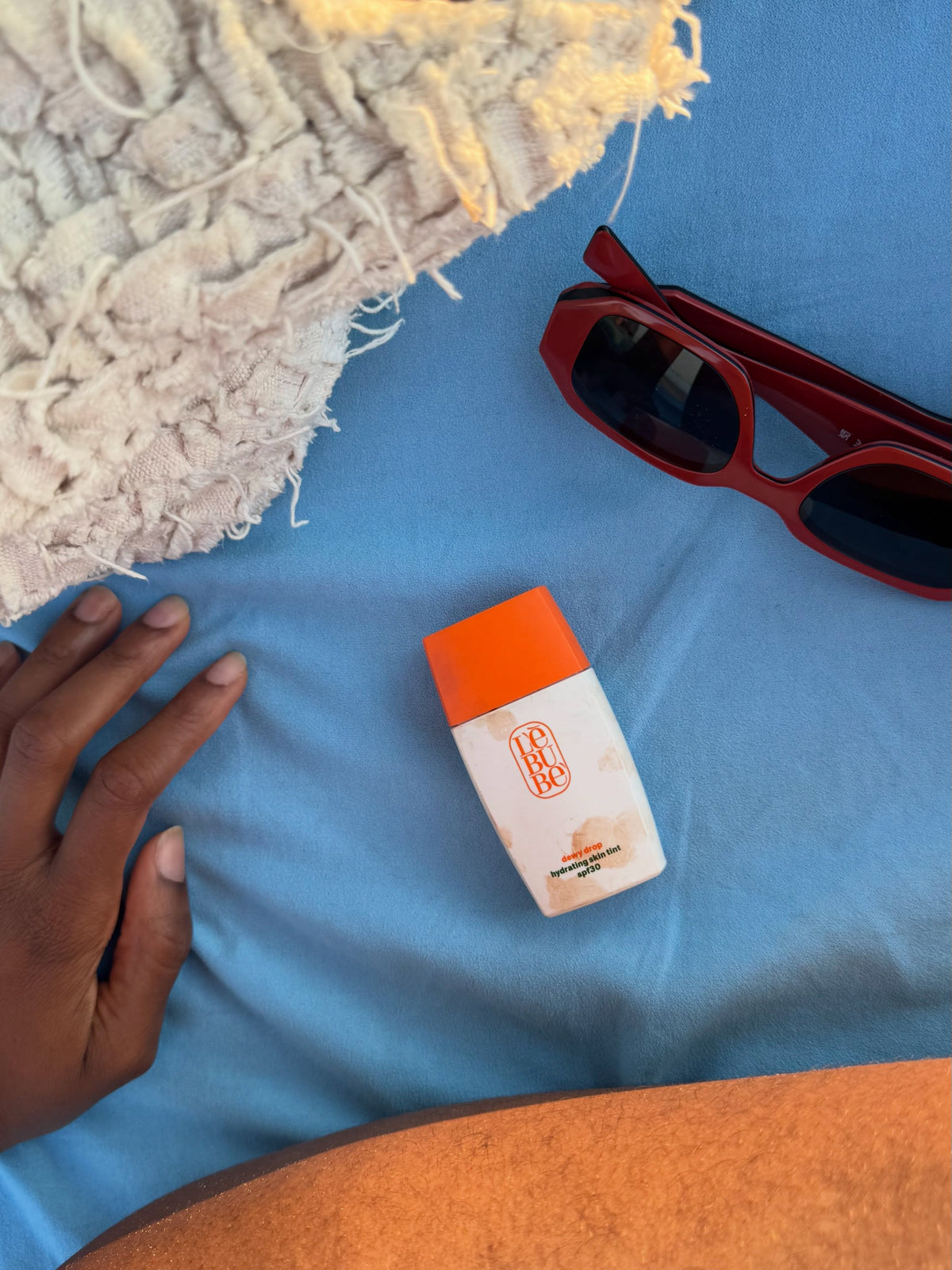
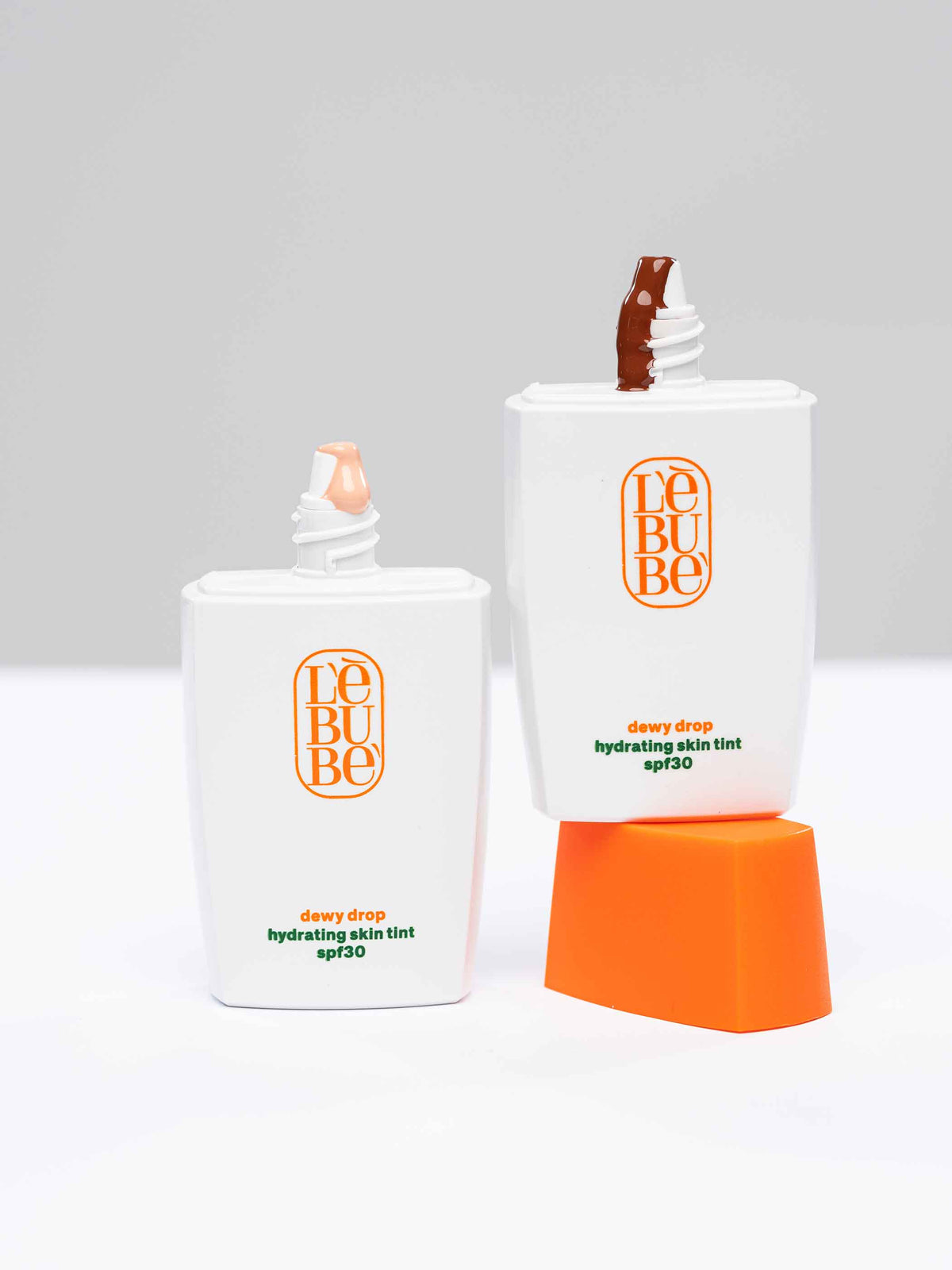
That's part of the thinking behind Dewy Drop Hydrating Skin Tint SPF30.
Dewy Drop combines sheer-to-medium, buildable coverage with a fresh, dewy finish, hydrating skincare benefits and mineral SPF30.
It's designed for the days when you want your complexion to look naturally even without the feel of traditional full-coverage foundation.
And because it's buildable, you can choose the amount of coverage that suits your look.
When wearing Dewy Drop over dedicated sunscreen, we recommend allowing your sunscreen to settle and applying the skin tint gently to minimise disruption of the layer underneath.
One important note: Dewy Drop contains SPF30, but a light makeup application may not deliver the full labelled protection. For reliable sun protection, use an appropriate dedicated sunscreen underneath.
The idea isn't to add more and more products.
It's to create a routine where skincare, sun protection and makeup can work comfortably together.
Because sometimes, the smartest beauty routine isn't about finding a product that does everything.
It's about choosing products that work well together.
Discover Dewy Drop Hydrating Skin Tint SPF30 →

💭 Final Takeaway
If your makeup separates over sunscreen, don't immediately blame the sunscreen.
And don't assume you need to buy a completely new routine.
Start by identifying what's happening.
Is your makeup pilling into little flakes?
Sliding across your skin?
Or separating into uneven patches?
Then look at your layers, formulas, timing and application technique.
Most importantly, don't sacrifice sunscreen application to make your makeup look better.
Your complexion products should work around your sun protection – not the other way around.
Good makeup layering isn't about how many products you use. It's about how well they work together.
❓ FAQs
Why does my sunscreen ball up under makeup?
Sunscreen can ball up when its film is disturbed by rubbing, when products don't layer well together or when excessive product buildup causes formulas to clump. The problem may involve the sunscreen, skincare underneath or makeup applied on top.
Why does my foundation separate over sunscreen?
Foundation can separate over sunscreen because of excess slip, oiliness, incompatible formulas or uneven application. If the product breaks apart without forming little balls, you're probably dealing with separation rather than pilling.
How long should I wait after sunscreen before applying makeup?
There's no universal waiting time. Follow your sunscreen's instructions and allow it to settle before applying makeup gently. If the formula still feels very wet or slippery, giving it more time may help.
Should I apply less sunscreen to stop pilling?
No. Applying less sunscreen can reduce your UV protection. Instead, simplify unnecessary skincare layers, adjust your makeup application and check whether your products layer well together.
Can two good products still pill together?
Yes. Pilling doesn't necessarily indicate poor product quality. Two well-formulated products can still interact poorly because of their textures, film-forming ingredients or application methods.
Is silicone the reason my makeup pills?
Not necessarily. Silicones are widely used in makeup and skincare for their texture and performance benefits. Pilling depends on the overall formulation and how products interact, rather than the presence of one ingredient.
Does skin type affect makeup pilling?
It can. Dry, flaky skin may create an uneven surface, while excess oil can contribute to makeup sliding or separating. Appropriate skin preparation can help, although product compatibility also matters.
Is a sponge or brush better for applying makeup over sunscreen?
Either can work. The important factor is using a gentle application technique that doesn't excessively rub or disturb the sunscreen underneath. Pressing or stippling may be more helpful than repeatedly dragging product across the skin.
Can a skin tint reduce pilling?
Sometimes. Lightweight skin tints may require less blending or product buildup than heavier foundations. However, a skin tint can still pill if its formula doesn't layer well with your sunscreen.
Should I replace my sunscreen if it keeps pilling?
Not immediately. First try simplifying your skincare, allowing sunscreen to settle and adjusting how you apply makeup. If the sunscreen still pills consistently, including when used alone according to its instructions, trying a different formula may be reasonable.
Does sunscreen go before or after skin tint?
Dedicated sunscreen generally goes after your skincare and before your complexion makeup. Apply it in the recommended amount, allow it to settle and then gently layer your skin tint on top.
Does SPF in skin tint mean I can skip sunscreen underneath?
Not necessarily. Although SPF in skin tint is tested, most people apply less makeup than the amount needed to achieve the labelled protection. Dedicated sunscreen remains the more reliable primary sun-protection step.
Related reading: Do You Still Need Sunscreen Under a Skin Tint with SPF?