Both promise a little colour and sun protection. But one starts with makeup, the other with sunscreen – and knowing the difference can change how you build your everyday routine.
7 MIN READ · 16 OCTOBER 2026
At first glance, a skin tint with SPF and a tinted sunscreen can look almost identical.
Both add colour. Both offer sun protection. Both can leave your skin looking naturally even, without the feel of traditional foundation.
So what's the actual difference?
It isn't necessarily the amount of pigment, the texture or even the SPF number.
It's what the product was primarily designed to do – and how you actually use it.
A skin tint with SPF starts with the complexion: coverage, finish and comfortable wear. A tinted sunscreen starts with sun protection, adding pigment to make the formula more wearable.
But here's where things get interesting: the two categories overlap more than you might think.
💡 Quick Answer
A skin tint with SPF is primarily a makeup product designed to even out skin tone while providing tested sun protection. A tinted sunscreen is primarily a sunscreen with added pigment to improve its appearance on the skin.
The main difference is their formulation priority, not necessarily their SPF level.
Skin tint with SPF = makeup-first. Ideal when you want lightweight, natural-looking coverage with added sun protection.
Tinted sunscreen = protection-first. Ideal when sun protection is your priority, but you also want a more even-looking finish.
Both can provide meaningful UV protection when properly tested, applied in sufficient quantities and reapplied as directed.
The best choice isn't simply about makeup versus sunscreen. It's about what you need the product to do – and how much you're actually going to apply.
👀 Skin Tint with SPF vs. Tinted Sunscreen at a Glance
| Feature | Skin Tint with SPF | Tinted Sunscreen |
|---|---|---|
| Primary purpose | Complexion enhancement | Sun protection |
| Coverage | Usually sheer to light, sometimes buildable | Usually sheer to light, but varies |
| Finish | Often dewy, natural or skin-like | Varies from matte to radiant |
| SPF | Tested sun protection | Tested sun protection |
| Main priority | Makeup performance + SPF | UV protection + cosmetic tint |
| Buildable coverage | Often | Depends on formula |
| Best for | Everyday complexion makeup | Sun protection with a tint |
| Can replace foundation? | Often, for lighter coverage | Sometimes, depending on coverage |
The key: neither category automatically provides better sun protection. The actual SPF, UVA protection, application amount and reapplication matter more than the product name.
What Is a Skin Tint with SPF?
A skin tint with SPF is a lightweight complexion product designed to even out skin tone while also providing sun protection.
Think of it as a more effortless alternative to traditional foundation.
Instead of creating a fully covered complexion, a skin tint usually allows your natural skin to remain visible.
Freckles, texture and the little things that make your skin yours don't necessarily disappear.
The goal is simply to make everything look a little more even.
Skin tints with SPF typically focus on:
- Sheer to light coverage
- Natural, skin-like finishes
- Comfortable everyday wear
- Buildable colour, depending on the formula
- Additional sun protection
Some formulas also incorporate skincare-inspired ingredients designed to support hydration and comfort.
The important distinction is that a skin tint is usually applied according to the coverage you want – not necessarily the amount required to achieve the SPF on its label.
And that matters when it comes to sun protection.

What Is a Tinted Sunscreen?
A tinted sunscreen is a sun-protection product formulated with added pigments to provide a more natural-looking finish.
Its primary purpose is protecting your skin from UV radiation.
The tint may help reduce the white cast associated with certain sunscreen filters, particularly mineral ones.
Depending on the formula, it may also provide subtle complexion-evening coverage.
Many tinted sunscreens contain iron oxides, which can offer an additional benefit: helping reduce the effects of visible light on pigmentation.
This can be particularly relevant for people concerned about melasma or dark spots.
Unlike a skin tint, tinted sunscreen is generally designed to be applied in the generous quantities recommended for effective sun protection.
But that doesn't mean all tinted sunscreens are sheer, or that they all look and feel the same.
Some tinted sunscreens offer surprisingly noticeable coverage – just as some skin tints are almost invisible on the skin.
The categories aren't as rigid as their names suggest.
What's the Real Difference Between Skin Tint and Tinted Sunscreen?
The biggest difference is formulation priority: skin tints are developed around complexion performance, while tinted sunscreens are developed around sun protection.
A skin tint asks:
"How can we make the complexion look naturally even, with a formula that's comfortable to wear?"
A tinted sunscreen asks:
"How can we deliver effective sun protection in a formula people enjoy applying?"
Both questions can lead to products that contain pigment, skincare ingredients and SPF.
And both can produce beautiful, natural-looking results.
The distinction becomes most important when you consider how much product you're likely to apply.
A skin tint may look perfect after a few drops.
But that amount may be far less than the quantity used to establish its labelled SPF.
A tinted sunscreen, on the other hand, is generally intended to be applied generously enough to deliver its stated protection.
The SPF number tells you what the product achieved under standardised testing conditions – not necessarily the protection you'll receive from your usual makeup application.
Which One Gives More Coverage?
Skin tints often provide more buildable complexion coverage, but tinted sunscreens can also offer noticeable colour correction.
A skin tint is usually designed to make the complexion look more even without completely concealing the skin underneath.
Depending on the formula, it may help soften the appearance of redness, uneven tone and minor imperfections.
Tinted sunscreen can also provide coverage, although its primary purpose remains protection.
The difference isn't always how much pigment is present.
It's how the product is intended to be applied.
With a skin tint, you may add another layer to increase coverage.
With tinted sunscreen, the priority is applying enough product to achieve appropriate protection.
If your main goal is complexion coverage, a skin tint may give you more control over the finished look.
If your main goal is sun protection with some colour correction, tinted sunscreen may be the more practical choice.

🔎 Does Tinted Sunscreen Protect Better Than Skin Tint with SPF?
Not automatically. A tinted sunscreen doesn't inherently provide stronger UV protection than a skin tint with the same tested SPF.
This is one of the most important distinctions to understand.
An SPF30 skin tint and an SPF30 tinted sunscreen can both meet their labelled SPF when tested according to the applicable standard.
But SPF performance depends on several factors:
1. SPF Rating
SPF primarily measures protection against UVB-related sunburn.
An SPF30 product filters approximately 97% of UVB radiation when applied at the tested amount.
2. UVA Protection
UVA rays also contribute to skin damage and premature ageing.
Look for appropriate UVA or broad-spectrum protection claims, according to the product's market and labelling.
3. Application Amount
This is where makeup and sunscreen habits often differ.
People typically apply complexion makeup until they're happy with the appearance.
That may be considerably less product than the amount required for the SPF stated on the packaging.
4. Reapplication
Sun protection needs to be maintained throughout the day.
When outdoors, sunscreen generally needs to be reapplied approximately every two hours, and after swimming or sweating according to its instructions.
A product's sun protection depends on how it's tested and how it's used – not whether the packaging calls it a skin tint or sunscreen.
Can Tinted Sunscreen Help With Hyperpigmentation?
Yes. Tinted sunscreens containing suitable iron oxide pigments can help protect against visible light, which can contribute to hyperpigmentation and melasma.
This is a benefit worth understanding.
Traditional SPF ratings focus primarily on UVB protection, while UVA protection is assessed separately.
Visible light is another part of sunlight that can contribute to pigmentation changes, particularly in people with darker skin tones.
Certain iron oxide pigments can help reduce visible-light exposure.
That's why tinted sunscreens containing iron oxides are often recommended for people concerned about melasma or dark spots.
However, not every tinted product offers the same degree of visible-light protection.
The presence of tint alone doesn't establish a specific protection level.
Look at the individual formula and any relevant testing or claims rather than assuming all tinted products perform identically.
👀 Which One Fits Your Routine Better?
The right product often depends less on your skin type and more on what you have planned for the day.
| Situation | What Makes Sense |
|---|---|
| Office or workday | Dedicated SPF + skin tint for a polished finish |
| Everyday errands | Sunscreen, with skin tint if you want coverage |
| Minimal makeup days | Tinted sunscreen |
| Natural everyday makeup | Skin tint over sunscreen |
| Beach or hiking | Water-resistant sunscreen, reapplied as directed |
| Gym or outdoor exercise | Appropriate water-resistant sunscreen |
| Long outdoor days | Dedicated sunscreen + optional complexion makeup |
| Hyperpigmentation concerns | Broad-spectrum tinted sunscreen with iron oxides |
These aren't strict rules.
A well-formulated tinted sunscreen may be all you want for an everyday complexion.
And a skin tint with SPF may be a beautiful addition to a more complete sun-protection routine.
The best combination is the one that delivers the protection you need and the finish you actually enjoy wearing.

Do You Still Need Sunscreen Under a Skin Tint with SPF?
For reliable daily sun protection, using a dedicated sunscreen underneath your skin tint is generally the safer approach.
The reason is simple.
Most people don't apply complexion makeup in the same quantities as sunscreen.
If your skin tint looks perfect after a few drops, applying significantly more product just to reach the tested SPF amount may not be practical.
That doesn't make the SPF in your makeup meaningless.
It simply means you shouldn't assume you're receiving the full labelled protection from a light cosmetic application.
A practical routine is:
Step 1: Apply a broad-spectrum sunscreen with SPF30 or higher in the recommended amount.
Step 2: Allow it to settle according to the product instructions.
Step 3: Apply your skin tint gently on top to achieve the complexion finish you want.
Step 4: Reapply sun protection as directed, particularly during extended outdoor exposure.
Think of SPF in makeup as a useful additional feature – not an excuse to underapply your primary sun protection.
Can You Use Tinted Sunscreen and Skin Tint Together?
Yes. You can layer tinted sunscreen underneath skin tint, provided the products work well together.
However, you may not always need both.
Since both contain pigment, combining them can sometimes create more coverage than you intended.
For a natural finish, you may prefer using an untinted sunscreen underneath your skin tint.
Alternatively, if your tinted sunscreen already provides enough coverage, you might skip the skin tint altogether.
And remember:
SPF values don't simply add together.
Layering SPF30 over SPF30 doesn't automatically create SPF60 protection.
The goal is to apply your primary sunscreen properly, then add makeup if you want it.
Can Skin Tint or Tinted Sunscreen Replace Foundation?
Yes. Both can replace foundation when you're happy with lighter, more natural-looking coverage.
Skin tint is often the easier transition if you're used to wearing foundation but want something less noticeable on the skin.
It can help even out your complexion while preserving a fresh, skin-like finish.
Tinted sunscreen can also work as a standalone complexion product, particularly if you prefer very minimal makeup.
Neither is necessarily intended to recreate the coverage of a medium- or full-coverage foundation.
But that's often part of the appeal.
Sometimes you don't want to cover your skin. You just want it to look a little more even.
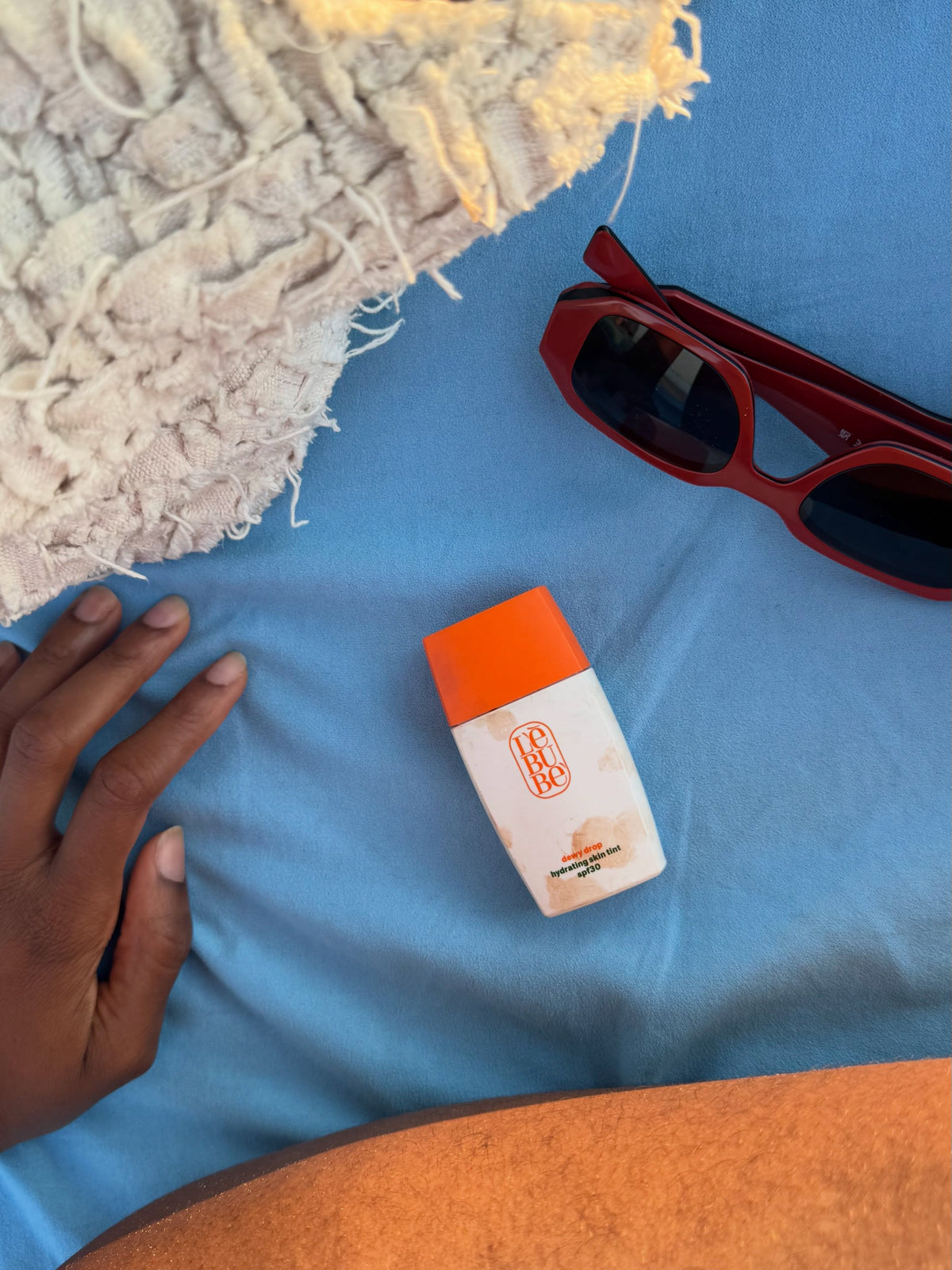
🍊 How Dewy Drop Fits Into Your Routine
At Lebubè, we developed Dewy Drop Hydrating Skin Tint SPF30 around a simple idea:
What if your everyday complexion makeup could do more than even out your skin tone?
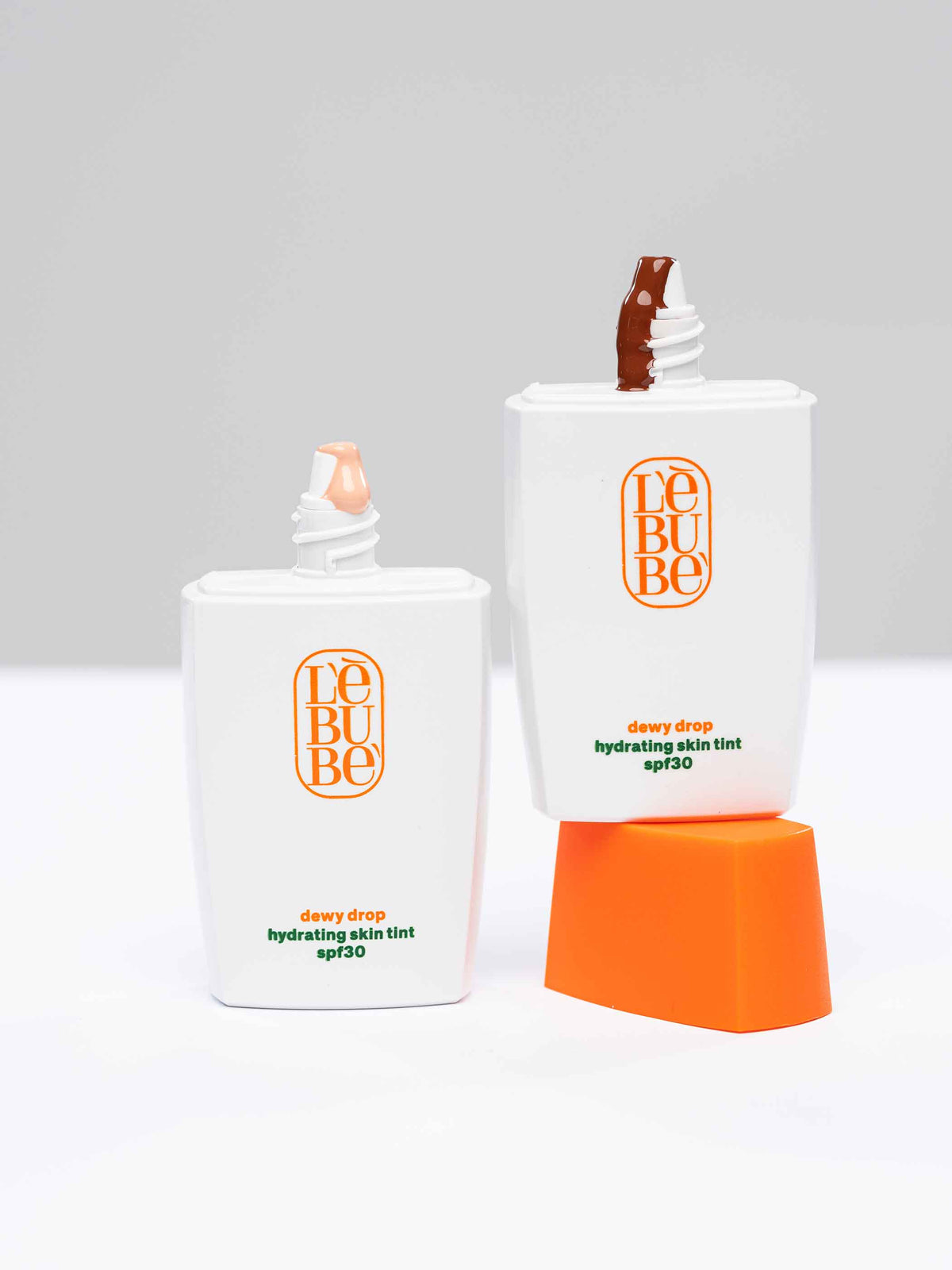
Dewy Drop combines sheer-to-medium, buildable colour with a fresh, dewy finish, hydrating ingredients and mineral SPF30.
It's designed for the days when you want your skin to look naturally even and radiant without the feel of traditional foundation.
And hydration isn't just part of the product story.
In instrumental testing, Dewy Drop showed:
- +14.4% skin hydration after 30 minutes
- +14.1% skin hydration after 28 days
The result is a complexion product that brings together makeup performance, hydration and tested SPF30.
But we believe in being clear about what SPF in makeup means.
For reliable sun protection, particularly during extended outdoor exposure, we recommend using an appropriate dedicated sunscreen underneath Dewy Drop and reapplying protection as needed.
Because hybrid makeup isn't about replacing every product in your routine.
It's about making the products you already wear do more.
Discover Dewy Drop Hydrating Skin Tint SPF30 →

💭 Final Takeaway
Skin tint with SPF and tinted sunscreen aren't interchangeable – but they aren't complete opposites either.
Choose a skin tint with SPF when your priority is natural-looking coverage, a comfortable complexion finish and added sun protection.
Choose a tinted sunscreen when sun protection is your primary goal and you want some colour correction without a separate makeup step.
Or use sunscreen and skin tint together when you want both reliable protection and a specific makeup finish.
Ultimately, the most important question isn't:
"Which product has the better SPF?"
It's:
"Am I applying enough protection for the day ahead – and am I getting the complexion finish I actually want?"
Because the best everyday routine shouldn't make you choose between caring for your skin and enjoying your makeup.
❓ FAQs
Is a skin tint with SPF the same as a tinted sunscreen?
No. A skin tint with SPF is primarily designed to enhance the complexion while providing sun protection. A tinted sunscreen is primarily developed for UV protection, with pigment added to improve its appearance on the skin. However, the categories can overlap.
Which provides better sun protection?
Neither category automatically provides better protection. The SPF rating, UVA protection, amount applied and reapplication determine how effectively the product protects your skin. Tinted sunscreen is generally designed to be applied generously as a primary sun-protection product.
Can I wear a tinted sunscreen instead of foundation?
Yes. Tinted sunscreen can replace foundation if its coverage and finish meet your preferences. Some formulas provide very sheer coverage, while others offer more noticeable complexion evening.
Can I wear skin tint over sunscreen?
Yes. Applying a skin tint over dedicated sunscreen is a practical way to combine reliable sun protection with natural-looking complexion coverage. Allow your sunscreen to settle and apply makeup gently to avoid disturbing the protective layer.
Does SPF in makeup count?
Yes. SPF in makeup is meaningful when the product has been appropriately tested. However, the labelled protection depends on applying the required amount, which is often more than people normally use for makeup.
Is SPF30 in a skin tint enough?
SPF30 provides substantial UVB protection when applied at the tested amount. But if you apply only a small amount of skin tint, you may receive less protection than the label indicates. A dedicated broad-spectrum sunscreen is generally the more reliable primary protection step.
Is tinted sunscreen better for hyperpigmentation?
Tinted sunscreen containing suitable iron oxides can offer additional protection against visible light, which may contribute to hyperpigmentation and melasma. The degree of protection depends on the individual formulation.
Can you layer SPF30 skin tint over SPF30 sunscreen?
Yes, but the SPF values don't add together. SPF30 over SPF30 doesn't automatically equal SPF60. Apply your sunscreen correctly first, then use your skin tint for coverage.
Which is better for oily skin?
Either can work. Lightweight textures and finishes that suit your preferences may be more important than whether the product is labelled skin tint or tinted sunscreen. Look for formulas that feel comfortable and work well with your skin.
Which is better for dry skin?
Both can work well. Hydrating skin tints and tinted sunscreens containing humectants or emollients may be particularly comfortable for dry skin. The overall formula matters more than the product category.
Can I use skin tint with SPF every day?
Yes, provided the formula suits your skin. For daily sun protection, make sure you're also applying an appropriate amount of sunscreen and maintaining protection throughout the day as needed.
Is tinted sunscreen always mineral?
No. Tinted sunscreens can use mineral, organic (chemical) or combined UV-filter systems, depending on the formula and market. The tint itself doesn't determine which sunscreen filters are used.