Your skin tint says SPF30. Your sunscreen says SPF30. So why would you need both? The answer has less to do with the number on the bottle – and more to do with how much you're actually wearing.
6 MIN READ · 21 OCTOBER 2026
Your skin tint has SPF30.
Your sunscreen has SPF30.
Surely that means you can skip one of them?
It's a reasonable question. After all, if your complexion product has been tested for sun protection, shouldn't it be enough on its own?
Not necessarily.
The difference isn't whether the SPF in your makeup works. It does.
The question is whether you're applying enough of it to receive the protection stated on the label.
And that's where the way we wear makeup makes all the difference.
💡 Quick Answer
Yes, it's generally recommended to wear dedicated sunscreen underneath a skin tint with SPF, especially if you'll be exposed to daylight.
Skin tints with SPF provide tested sun protection, but most people apply much less complexion makeup than the amount used during SPF testing.
That means an SPF30 skin tint won't necessarily deliver SPF30 protection when applied in a thin, natural-looking layer.
For reliable protection, apply a broad-spectrum sunscreen with SPF30 or higher in the recommended amount, then layer your skin tint on top.
The SPF in your makeup counts. But how much you apply determines how much protection you actually get.
👀 SPF in Skin Tint vs. Sunscreen at a Glance
| Question | The Answer |
|---|---|
| Does SPF in skin tint work? | Yes, when appropriately tested and applied |
| Is SPF30 in makeup the same as SPF30 in sunscreen? | The rating uses standardised SPF testing, but actual protection depends on application |
| Do you need sunscreen underneath? | Generally recommended for reliable protection |
| Why? | Most people apply makeup too sparingly to achieve its labelled SPF |
| Can you layer SPF products? | Yes, but SPF values don't simply add together |
| What about reapplication? | Protection needs to be maintained, particularly outdoors |
The most important distinction isn't between makeup SPF and sunscreen SPF.
It's between the protection measured in a laboratory and the protection achieved when you actually wear the product.
Why Isn't the SPF Number the Whole Story?
The SPF printed on a product reflects its performance under standardised testing conditions – not a guarantee of the protection you'll receive from any amount you apply.
To establish an SPF rating, products are tested at a standard application density of 2 milligrams per square centimetre of skin (2 mg/cm²).
That's a relatively generous, even layer.
But think about how you apply your skin tint.
You might use a few drops, blend them across your face and stop as soon as your complexion looks even.
That's exactly how complexion makeup is designed to be enjoyed.
The problem?
The amount that gives you your favourite makeup finish may be significantly less than the amount needed to achieve the SPF on the label.
And applying less product generally means receiving less protection.
This doesn't make the SPF claim misleading or the product ineffective.
It simply means that the tested protection and your everyday application may be two different things.
🔎 The Three Things That Determine Your Real SPF Protection
The protection you actually receive depends on three closely connected factors.
1. The SPF Rating
SPF indicates how well a product protects against UVB-related sunburn when tested under standardised conditions.
For example, SPF30 filters approximately 97% of UVB radiation at the tested application amount.
But SPF alone doesn't tell you everything about UVA protection, which is why broad-spectrum or appropriate UVA protection claims also matter.
2. How Much You Apply
This is particularly important with complexion makeup.
A thin layer of SPF30 skin tint doesn't necessarily provide the same protection as a generous application of SPF30 sunscreen.
The formula may be identical to the one tested in the laboratory.
The amount on your skin isn't.
3. How You Maintain Protection
Sun protection doesn't remain perfectly intact throughout the day.
Sweat, rubbing, touching your face and other everyday activities can disturb the protective layer.
That's why sunscreen needs to be reapplied according to its instructions, particularly during extended outdoor exposure.
SPF isn't just a number. It's a tested level of protection that depends on how the product is used.
How Much Skin Tint Would You Actually Need?
To achieve its labelled SPF, a skin tint generally needs to be applied at the same standardised density used in SPF testing: 2 mg/cm².
For the face, that can mean considerably more product than you'd normally use to create a natural-looking makeup finish.
And here's the practical problem.
Skin tint is designed to make your complexion look more even.
You apply it until you're happy with the coverage.
Sunscreen, on the other hand, is applied according to the amount needed for protection.
Those are two very different ways of deciding when to stop.
Applying enough skin tint to match the laboratory testing amount might create a heavier finish than you want, particularly with more pigmented formulas.
That's why relying on dedicated sunscreen underneath makeup is generally the more practical approach.
You can apply sunscreen for protection and skin tint for appearance, without asking one product to compromise either goal.
Does SPF in Makeup Still Count?
Absolutely. SPF in makeup is real, tested sun protection – not just a marketing feature.
This is worth emphasising because the advice to wear sunscreen underneath makeup can sometimes create the wrong impression.
A skin tint with SPF isn't pointless.
Its sun-protection function is meaningful when the product has been appropriately tested.
The limitation is how much makeup people typically apply.
If you wear a thin layer, you may receive less protection than the labelled SPF.
That doesn't mean the formula contributes nothing.
It means you shouldn't rely on an unknown level of protection as your only sunscreen when effective UV protection matters.
And that's an important distinction.

Can You Skip Sunscreen If You're Mostly Indoors?
Your need for sun protection depends on your actual exposure – including time outdoors, UV conditions and proximity to windows.
Spending the entire day away from direct sunlight is different from spending several hours outside.
But "mostly indoors" doesn't always mean "no UV exposure".
You might commute, walk outside at lunchtime, sit near a sunny window or spend time driving.
UVA radiation can also pass through ordinary window glass, although the amount transmitted varies by glass type.
So rather than assuming your skin tint provides enough protection because you're spending most of the day indoors, consider your actual routine.
| Situation | Practical Approach |
|---|---|
| Working indoors, away from windows | Sun protection needs depend on exposure |
| Commuting and running errands | Dedicated sunscreen is a sensible choice |
| Working beside sunny windows | Consider daily UVA protection |
| Outdoor lunch or walking | Apply dedicated sunscreen |
| Beach, hiking or outdoor sports | Use appropriate water-resistant sunscreen and reapply |
| High UV exposure | Prioritise sunscreen, shade and protective clothing |
The goal isn't to make your morning routine unnecessarily complicated.
It's to make sure your protection matches your exposure.
Can You Layer Sunscreen and Skin Tint with SPF?
Yes. Applying skin tint over dedicated sunscreen is a practical way to combine reliable sun protection with the complexion finish you want.
The two products have different jobs.
Your sunscreen provides your primary protection.
Your skin tint provides colour, coverage and any additional benefits included in its formula.
Here's a simple way to combine them:
- Start with skincare. Cleanse and moisturise as needed.
- Apply dedicated sunscreen. Choose a broad-spectrum SPF30 or higher and use the recommended amount.
- Allow it to settle. Follow the sunscreen's instructions before applying makeup.
- Apply your skin tint. Blend gently rather than rubbing aggressively over your sunscreen.
- Maintain your protection. Reapply sunscreen as directed, especially when outdoors.
One important thing to remember:
SPF values don't add together.
Applying SPF30 sunscreen underneath SPF30 skin tint doesn't automatically give you SPF60.
The benefit of layering is that you can apply your primary sunscreen properly while still enjoying your makeup.

Why Does Reapplying SPF Matter?
Even a correctly applied morning sunscreen won't necessarily provide adequate protection throughout a long day outdoors without reapplication.
Protection can be disturbed by sweat, water, friction and everyday contact.
For extended outdoor exposure, sunscreen is generally recommended to be reapplied about every two hours, and after swimming, sweating or towel-drying, according to the product's instructions.
But what if you're wearing makeup?
This is where things become less convenient.
Reapplying a full layer of sunscreen over a finished complexion can disturb your makeup.
Some people use sunscreen sticks, sprays or powders for touch-ups.
These formats can be convenient, but convenience doesn't automatically mean you're applying enough product to achieve the stated SPF.
In particular, sunscreen powders and sprays may be difficult to apply evenly and generously enough.
For reliable protection, prioritise a sunscreen format that allows you to apply the required amount, even if that means refreshing some of your makeup afterwards.
The best sunscreen routine isn't the one that looks perfect at 8 a.m. It's the one that keeps protecting you when you actually need it.
👀 Common Myths About SPF in Makeup
| Myth | Reality |
|---|---|
| "My skin tint has SPF30, so I don't need sunscreen." | You may not apply enough skin tint to achieve SPF30 protection |
| "SPF in makeup doesn't work." | It does, when appropriately tested and applied |
| "SPF50 always protects me better than SPF30." | A higher tested SPF offers greater potential protection, but proper application remains essential |
| "SPF30 + SPF30 = SPF60." | SPF values don't add together |
| "I only need sunscreen at the beach." | Everyday UV exposure can also matter |
| "A quick dusting of SPF powder is enough." | Adequate and even application is still necessary |
The pattern is clear.
Sun protection is about more than choosing a product with SPF on the label.
It's about using that product in a way that allows it to do its job.
Why Choose a Skin Tint with SPF If You Still Need Sunscreen?
It's a fair question.
If you're applying sunscreen underneath anyway, why bother choosing makeup that also contains SPF?
Because SPF isn't the only reason to choose a skin tint – and it doesn't have to be.
A good skin tint can offer a combination of benefits that make it appealing for everyday wear:
- Natural-looking complexion coverage
- Comfortable, lightweight textures
- Hydrating or conditioning ingredients
- A finish that feels more like skin than traditional foundation
- Tested SPF as an additional product feature
The real value of a skin tint with SPF isn't necessarily that it eliminates your sunscreen step.
It's that it brings together several useful functions in a product you'd already want to wear.
And that's where hybrid makeup becomes interesting.
Not every multifunctional product needs to replace an entire routine to earn its place in it.
🍵 How Dewy Drop Fits Into Your SPF Routine
At Lebubè, we believe makeup should do more than one thing – but every function needs a reason to be there.
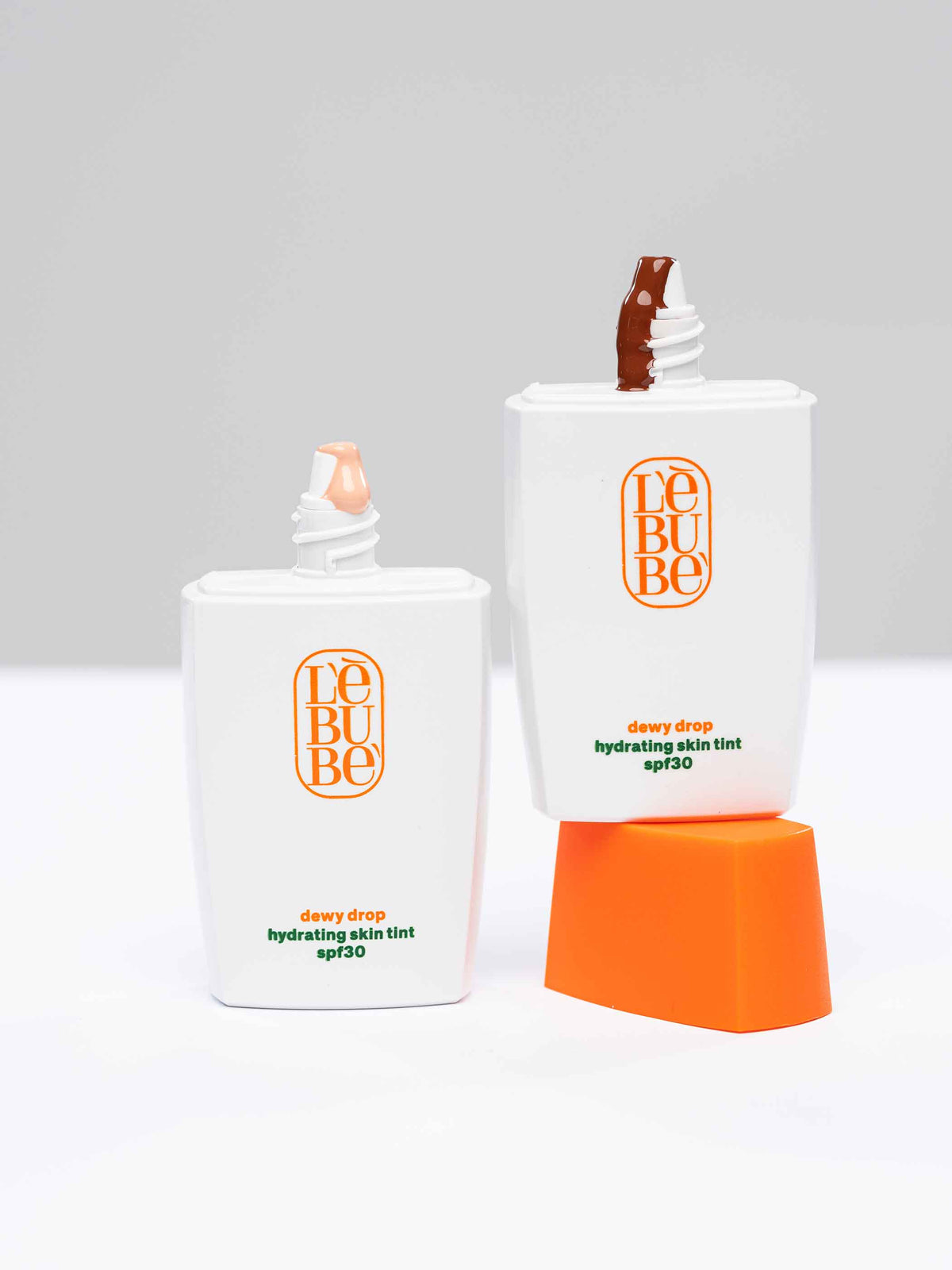
That's the thinking behind Dewy Drop Hydrating Skin Tint SPF30.
We wanted to create an everyday complexion product that combines:
- Sheer-to-medium, buildable coverage for a naturally even-looking complexion
- A fresh, dewy finish that still looks like your skin
- Hydrating skincare benefits for comfortable everyday wear
- Mineral SPF30 as part of the formula
And the hydration benefits have been evaluated through testing.
Dewy Drop showed +14.4% skin hydration after 30 minutes and +14.1% after 28 days in instrumental testing.
But here's something we believe is just as important as talking about what a product does:
Being clear about what it doesn't replace.
Dewy Drop contains SPF30, but if you're applying it in the amount that gives you your preferred makeup finish, you shouldn't assume you're receiving the full labelled protection.
That's why we recommend using dedicated sunscreen underneath when reliable sun protection is needed.
Think of Dewy Drop as the complexion step that makes your skin look naturally even while bringing hydration and SPF into the same formula.
Because hybrid beauty isn't about claiming that one product can replace everything.
It's about making every product you choose work a little harder.
Discover Dewy Drop Hydrating Skin Tint SPF30 →

💭 Final Takeaway
So, do you still need sunscreen under a skin tint with SPF?
For reliable everyday sun protection, generally yes.
Not because the SPF in your skin tint doesn't work.
But because most of us apply makeup for the way it looks, not in the quantities required for its tested SPF.
And those two amounts aren't necessarily the same.
Your sunscreen can take care of your primary UV protection.
Your skin tint can take care of your complexion.
And if your skin tint also offers hydration, comfortable wear and tested SPF?
That's a useful extra.
Your makeup doesn't need to replace your sunscreen to be a smarter makeup product.
❓ FAQs
Does SPF in makeup actually work?
Yes. Makeup containing SPF can provide tested sun protection. However, the labelled SPF is established using standardised application amounts, and most people apply complexion makeup more sparingly than sunscreen.
Do dermatologists recommend sunscreen underneath skin tint?
Generally, yes. Dedicated sunscreen is the more reliable primary protection step because it can be applied in the recommended amount without needing to achieve a particular makeup finish.
Does SPF30 in a skin tint replace sunscreen?
Not necessarily. An SPF30 skin tint can provide its labelled protection when applied at the tested amount, but a typical light makeup application may provide less. Dedicated sunscreen is generally recommended when reliable UV protection is needed.
How much skin tint would I need to achieve the labelled SPF?
SPF testing typically uses an application density of 2 mg/cm². Depending on the product and the area covered, that may be considerably more than you'd normally use for a natural-looking complexion.
Can I skip sunscreen if I'm indoors all day?
It depends on your exposure. If you're indoors away from direct sunlight, your UV exposure may be limited. If you spend time outdoors, drive frequently or sit beside sunny windows, dedicated sun protection becomes more relevant.
Is it okay to layer SPF products?
Yes. You can apply skin tint with SPF over dedicated sunscreen. However, SPF values don't add together mathematically, so SPF30 plus SPF30 doesn't automatically equal SPF60.
How should I reapply sunscreen over makeup?
Choose a method that allows you to apply enough sunscreen evenly. Sticks, sprays and powders may be convenient, but their labelled SPF still depends on adequate application. For prolonged outdoor exposure, refreshing your sunscreen properly is more important than preserving your makeup perfectly.
Does a higher SPF in makeup mean I can apply less?
No. A higher SPF rating doesn't remove the need to apply the tested amount. Applying too little of an SPF50 makeup product can still result in less protection than expected.
Is skin tint with SPF better than foundation without SPF?
Not necessarily. Both can be good complexion products. Skin tint with SPF adds tested sun protection as a feature, while a foundation without SPF can be paired with dedicated sunscreen. Choose based on the coverage, finish and comfort you prefer.
What's the difference between a skin tint with SPF and a tinted sunscreen?
A skin tint with SPF is primarily designed to enhance the complexion, while tinted sunscreen is primarily formulated for sun protection with added pigment. Both can offer coverage and SPF, but their intended use and formulation priorities may differ.
Read our related guide: Skin Tint with SPF vs. Tinted Sunscreen