
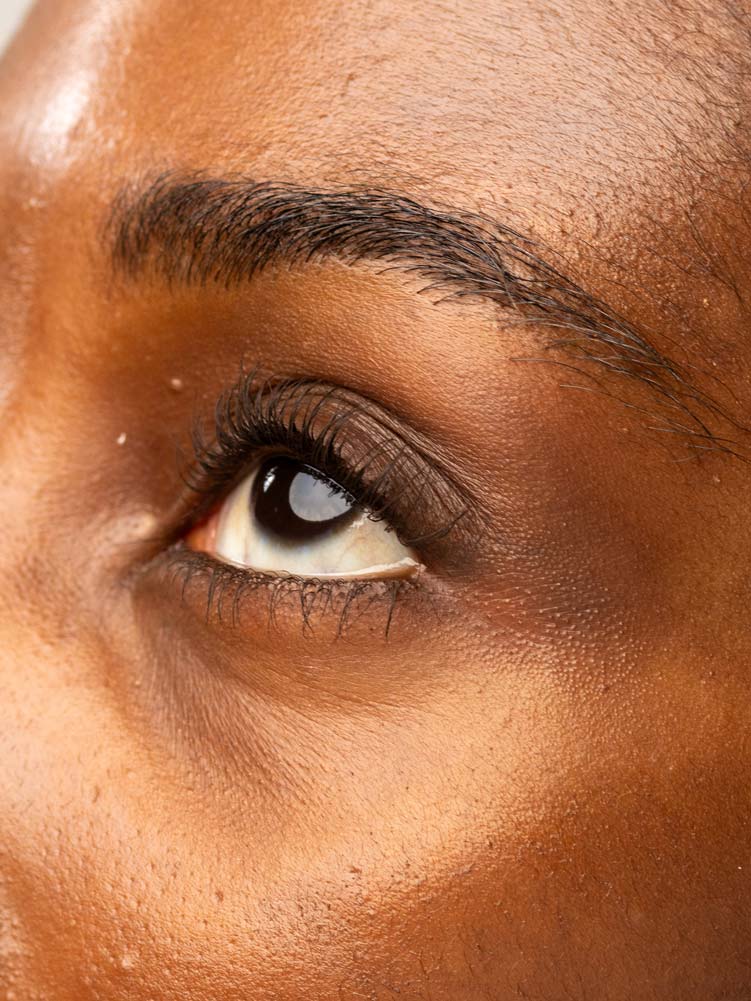
Brown mascara can create just as much length and definition as black mascara. The difference is contrast – and that changes how your entire eye area is perceived.
6 MIN READ · 1 AUGUST 2026
Brown mascara and black mascara can use the exact same brush, create the same length and separate every lash in exactly the same way – and still look completely different.
The reason has surprisingly little to do with mascara performance.
It comes down to contrast.
Black mascara creates a stronger visual frame around the eyes. Brown softens that frame, allowing the lashes to remain defined without becoming the first thing you notice.
That's why brown mascara works so naturally with everyday makeup, soft glam and the "my lashes but better" look.
💡 Quick Answer
Brown mascara looks more natural because it creates less visual contrast between your lashes and the rest of your features.
It can still provide visible length, volume, lift and separation. What changes is how strongly those defined lashes stand out.
In other words:
Brown mascara doesn't make your lashes disappear – it makes the mascara disappear.
👀 Why Does Brown Mascara Look More Natural Than Black?
Our eyes naturally notice contrast.
The greater the difference between two colours, the more clearly we perceive the boundary between them.
Black mascara = higher contrast. It creates a stronger visual frame around the eyes, making the lashes themselves more noticeable.
Brown mascara = softer contrast. It still defines the lashes, but allows that definition to blend more naturally into the overall face.
Think of two identical lines drawn on white paper: one in jet black and one in dark brown. They're exactly the same thickness, but the black line catches your attention first.
Mascara works in much the same way.
The difference isn't necessarily how defined your lashes are. It's how much contrast that definition creates.

Does Less Contrast Mean Less Lash Definition?
No. Definition and contrast are two different things.
Definition comes from what the mascara actually does to the lashes. A good mascara can:
- separate the lashes
- add visible length
- create volume
- lift the lashes
- help hold a curl
Contrast determines how strongly those defined lashes stand out against the rest of your features.
That's why a well-pigmented brown mascara can create visibly longer, fuller and more defined lashes while still looking softer than black.
The performance hasn't disappeared.
Only the contrast has changed.
What Is the Mascara Contrast Scale?
Brown versus black isn't necessarily a binary choice. Mascara shades sit on a spectrum, with different colours creating different levels of visual contrast.
| Shade | Typical contrast |
|---|---|
| Light brown | Lowest |
| True brown | Soft |
| Espresso brown | Soft–medium |
| Soft black | Medium–high |
| Jet black | Highest |
The exact effect depends on your natural lash colour, skin tone and the pigmentation of the mascara itself.
A pale or reddish brown, for example, may look extremely subtle on naturally dark lashes.
A rich true or espresso brown can still create significant definition – just without the stark visual contrast of jet black.
Why Does Brown Mascara Work for Natural Makeup?
Brown mascara works well for natural-looking makeup because it defines the lashes without making the mascara itself overly obvious.
Natural-looking makeup isn't necessarily about wearing fewer products.
It's about making the products you're wearing feel more integrated with your features.
That's why brown mascara works particularly well with:
- no-makeup makeup
- "clean" or minimal makeup
- soft glam
- everyday makeup
- skin-focused looks
In these styles, the goal usually isn't to make one individual product stand out. It's to make the face look subtly more defined, polished and awake.
Brown mascara supports that effect because it frames the eyes without creating a hard visual boundary around them.
Your lashes still look longer and more defined. They just don't immediately announce: "I'm wearing mascara."
Does Brown Mascara Look Natural on Dark Lashes?
Yes. Brown mascara can look natural on dark lashes, but choosing a sufficiently pigmented brown matters.
A very light brown may create little visible definition on naturally dark lashes. A rich true brown or espresso brown can still add noticeable length, separation and volume.
The goal isn't necessarily to make dark lashes suddenly look brown.
Instead, brown mascara can make the overall eye area look slightly softer than it would with jet-black mascara.
So if you have naturally dark lashes but find black mascara too intense for everyday makeup, you don't necessarily need less mascara.
You may simply want less contrast.
Why Can Black Mascara Sometimes Look Too Harsh?
Black mascara can look harsh when the contrast it creates around the eyes is stronger than the rest of the makeup.
For dramatic makeup, that contrast can be exactly what you want.
But imagine minimal skin makeup, softly defined brows, a neutral lip – and then intensely black lashes.
The lashes can suddenly become the strongest visual element on the face.
Brown mascara reduces that contrast.
It allows the lashes to remain defined while sitting more naturally alongside your skin, brows and eye makeup.
That's why someone can apply exactly the same amount of brown mascara and feel that their entire makeup look has become softer.
The difference isn't necessarily the amount of product. It's the visual intensity.

When Should You Choose Black Mascara Instead?
Black mascara is often the better choice when strong contrast is part of the look you're trying to create.
Choose black when you want:
- maximum contrast
- dramatic evening makeup
- bold or graphic eye looks
- smoky eyes
- stronger lash visibility in photography
- lashes to become a focal point
Brown works beautifully when the goal is softer definition.
Black works beautifully when the goal is stronger contrast.
For many people, owning both makes more sense than choosing one permanently.
🔎 The Difference to Remember
If there's one thing to take away from brown vs black mascara, it's this:
Definition is what mascara does to your lashes.
Contrast is how noticeable those defined lashes become.
Brown mascara doesn't necessarily give you less mascara.
It gives you less visual contrast.
🍵 Why We Chose a True Brown for Tea Mascara
When developing Tea Mascara Brown, we didn't want to create a brown that disappeared on the lashes – or one that pulled noticeably red, bronze or orange.
We wanted a rich true neutral espresso brown that would preserve visible definition while softening the contrast you get from black mascara.
That balance is at the heart of Tea Mascara Brown: lashes should still look longer, separated and defined. The colour simply shouldn't overpower the eyes.
Formula mattered just as much as shade. That's why Tea Mascara Brown combines our true-brown pigment with the same performance-led, lash-conscious approach as the rest of the Tea Mascara range.
The result? Defined lashes that frame your eyes without overpowering them.
Tea Mascara Brown was later featured in Vogue Italia's selection of the 6 best brown mascaras of 2026, recognised for its true-brown shade, performance and lash-care benefits.

💭 Brown vs Black Mascara: Which Looks More Natural?
Brown mascara generally looks more natural than black because it creates less visual contrast around the eyes.
That doesn't make brown universally better.
If you want your lashes to create a strong frame around your eyes, black will usually give you more impact.
If you want your lashes to enhance your eyes without becoming the focal point, brown creates a softer effect.
So instead of asking:
"Which mascara colour suits me?"
Ask:
"How much contrast do I want my lashes to create?"
Brown and black are simply two different tools for controlling that contrast.
💭 Final Takeaway
Brown mascara doesn't look more natural because it creates less definition.
It looks more natural because it creates less contrast.
Your lashes can still look longer, fuller, lifted and defined – but the mascara itself becomes less visually obvious.
And that's ultimately what natural-looking makeup is about: not necessarily wearing less, but making what you're wearing feel more integrated with your features.
If black mascara makes your lashes the star of your makeup, brown mascara lets your eyes take centre stage.
❓ FAQs
Why does brown mascara look more natural than black mascara?
Brown mascara looks more natural because it creates less visual contrast between the lashes and the surrounding features. It can still define, lengthen and volumise the lashes, but the overall effect appears softer than black mascara.
Does brown mascara make your lashes look less defined?
No. Definition and contrast are different things. A well-formulated brown mascara can still create length, volume, lift and separation. The brown pigment simply creates less visual contrast than black.
Does brown mascara look natural on dark lashes?
Yes. A rich true or espresso brown can still visibly define naturally dark lashes. Rather than making the lashes look obviously brown, it usually creates a softer overall effect than jet black.
Is brown mascara good for no-makeup makeup?
Yes. Brown mascara works particularly well for no-makeup makeup because it defines the lashes without creating an obvious dark frame around the eyes. The result can look polished while remaining understated.
Can brown mascara still create volume?
Yes. Mascara volume depends primarily on the formula, brush and application rather than whether the pigment is brown or black. A volumising brown mascara can therefore create full lashes while maintaining softer contrast.
Is brown mascara only for daytime?
No. Brown mascara can work beautifully for evening makeup too. Pair it with brown eyeliner, deeper eyeshadow or a smoky eye for a softer alternative to a classic black eye look.


